No Results Found
The page you requested could not be found. Try refining your search, or use the navigation above to locate the post.

The page you requested could not be found. Try refining your search, or use the navigation above to locate the post.
If your business has acquired the rights to use another party’s invention, creation, or intellectual property (IP), then congratulations: you are now a licensee!
Licensees pay licensing royalties to a licensor when they monetize the IP they have acquired. What follows is a guide to licensing royalties, how they work, the benefits and risks they involve, and the systems that can help you manage them.

Licensing royalties are payments made in exchange for the use of licensed intellectual property (IP), and are tied to the revenue generated as a result of the license. The IP may be a copyright, patent, or trademark, and may exist in a wide variety of mediums or forms: visual, audio, text, code, or an invention or creation of almost any kind.
Licensing royalties are calculated based on either a percentage of sales or a fixed amount per unit sold. For example, 10% of net sales or $1 per unit.
Whether it’s a percentage or a fixed amount, the royalty rate is agreed upon by the licensor and licensee and defined in the licensing agreement they sign when they establish their business relationship.
The agreement will also contain a number of other licensing terms which affect how royalties are calculated and paid, such as:
Royalty payments come in dozens of different types in our modern, information-based economy. Some common types include:
Whatever type of licensing royalties you need to pay, Royalty Tracker® can help you accurately calculate and pay your royalties in 90% less time.

A licensing fee is set at a fixed amount, while royalties are calculated based on usage or sales. A single licensing agreement may involve both licensing fees and royalties.
Licensing royalties allow both parties in the agreement to share in the risk and in the upside of the business venture. The licensor invests in the cost of developing the licensed material, while the licensee invests in marketing it, and both have the opportunity to make a profit when the material is sold or monetized.
Royalty agreements involve risks for licensors, particularly around payment accuracy and revenue guarantees. If the licensee intentionally or accidentally underreports sales, they may also end up underpaying their royalties. If sales are lower than expected and there are no guaranteed royalty or advance payments, then the licensor may receive no revenue at all.
Both parties in a licensing agreement give up some level of control over the product, compared to what they would have if the product was conceived and sold by a single company.
The risks of licensing royalty agreements can be mitigated by developing strong, secure partnerships, with clear and detailed agreements, based on a foundation of honesty and trust between the two parties.
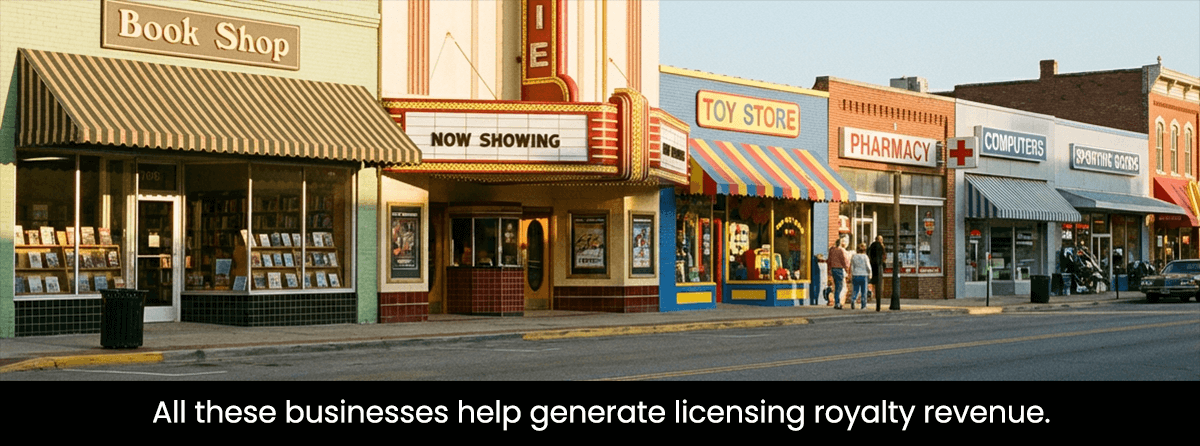
Below are a few sample scenarios illustrating when licensing royalties may be paid.
MetaComet® Systems helps licensees calculate and pay out licensing royalties quickly and accurately, no matter what industry you’re in. Our Royalty Tracker® makes it easy to input the terms of your licensing agreements, upload sales information, and instantly generate royalty statements, reports, and electronic payment files.
Would you like to see how MetaComet® Systems can help you? Contact us for a no-pressure demo today, and see how easy and stress-free licensing royalties can be.

David Marlin is the President and Co-Founder of MetaComet® Systems, a prominent provider of royalty automation tools. Since founding the company in 2000, David has spearheaded the development of a suite of best-in-class systems that effectively facilitate royalty processes for nearly 200 publishers. David has also served as the chair for The Book Industry Study Group’s Rights Committee and Digital Sales Committee.
Before establishing MetaComet Systems, David served as a technology consultant for renowned publishers, collaborating with notable companies such as Random House, Penguin, HarperCollins, Holtzbrinck, Macmillan, Scholastic, Time Warner, and many others. David holds both an MBA and a BA from Columbia University in New York.
"*" indicates required fields